
1  grammi ca 1000 semi
Semina: da marzo a settembre
Sesto: 30cm tra le piante e  30cm tra le file
Raccolta: per le foglie circa 30 giorni dopo la semina, per  la
raccolta dei semi circa 75 giorno dalla semina
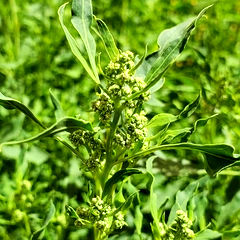
Atlixco Quelites (Chenopodium berlandieri ?)
Atlixco Quelites (Chenopodium berlandieri ?): we are delving deeper into our beloved Mexico, with quelites, this word derives from the Nahuatl quilitl, which means "edible herb", but today it can take on the broader meaning of "vegetable" (such as the more or less spontaneous brassicas in Michoacan).
From the Puebla region, the quelite from the Atlixco area is very important for local cuisine. The leaves are used boiled, dried and ground into flour, to stuff tacos, in soups, as it is practically an amaranth, seeds are also used.
Particularly appreciated is the inflorescence, here called Huazontle, a term which however commonly indicates another variety of C. beralndieri., with a more pronounced and compact ear.
In the fields it is practically spontaneous, particularly resistant to heat and drought, and is similar to our "farinello" (chenopodium album).
WARNING: We recommend growing this species only to those interested in traditional Mexican cuisine and to those passionate about seed saving: don't expect exceptional flavors. Whether unusual or unfamiliar, chenopodiums are part of our most atavistic organoleptic memories, for better or worse.
Personally, I'm Pietro Segatta [ed.], and I greatly appreciate this variety because, in addition to defining the taste of many recipes in a culinary tradition I love, I see it as a symbol of the alliance between humans and plants. Unfortunately, our farinello, although sporadically used in cooking, hasn't had the same success, probably because it's very competitive with wheat.